Nutrition
Beyond the Bowl: Pioneering the Sensory Science Behind Pet Nutrition
True nourishment starts with enjoyment: a diet can only deliver health benefits if a pet consistently eats it. Understanding what drives food acceptance is, therefore, an important area of pet nutrition research.
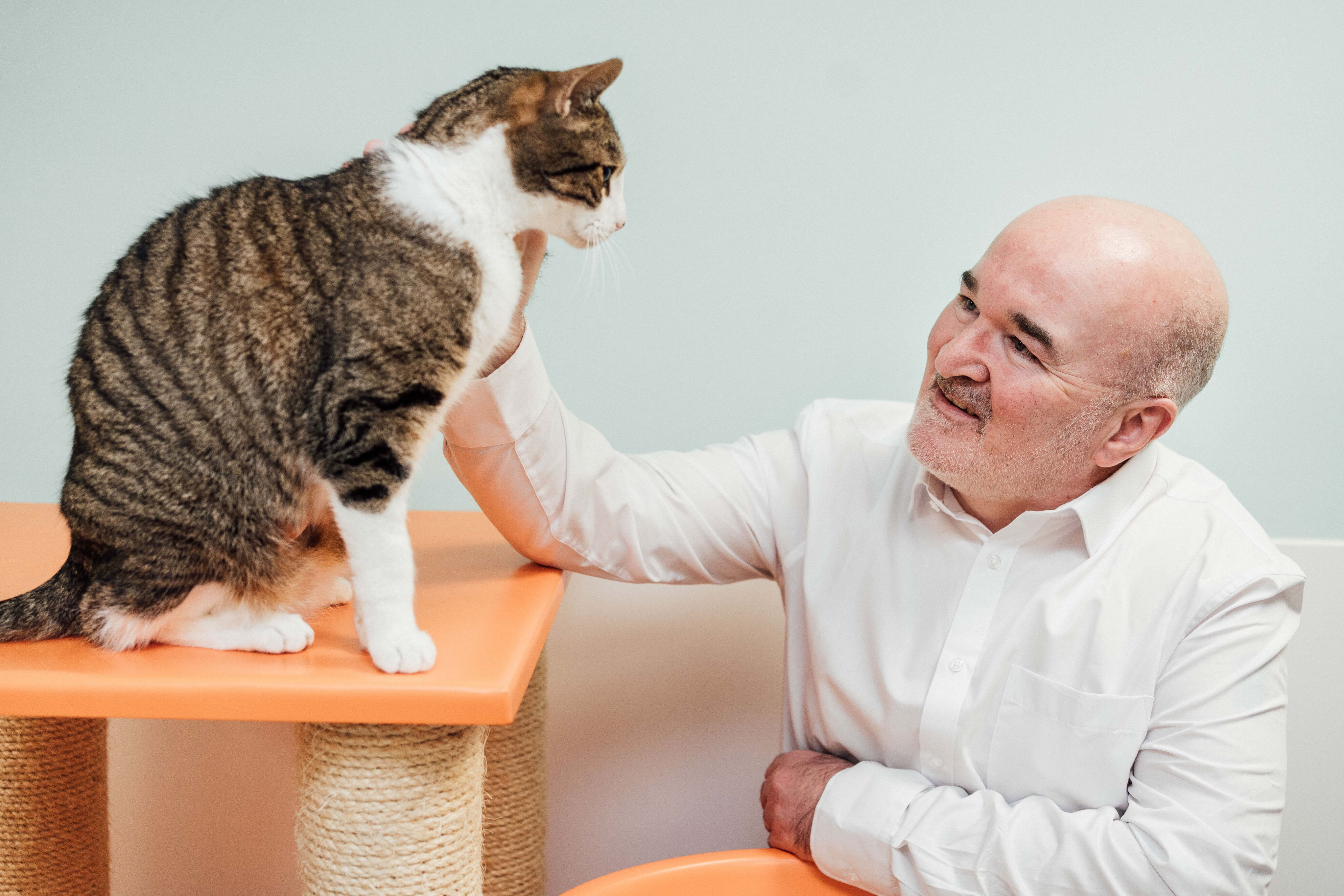
Through research into palatability, Waltham Petcare Science Institute is advancing what’s known about the sensory factors that influence pets’ food experiences. Dr. Scott McGrane, Senior Research Manager, explains what the research programme has set out to achieve and some of the insights it has uncovered so far.
What palatability research are you exploring?
We conduct scientific research into how cats and dogs experience food by exploring how their senses, natural feeding instincts and food composition interact.
Through strategic partnerships with external research institutions and collaboration with our Applied Science teams, our investigations lead to discoveries that can be translated into science-backed Mars Petcare products. By doing so, we help deliver the nutrition pets need through an eating experience they enjoy.
Who could benefit from a better understanding of how pets experience food through their senses?
Insights from this area of research can benefit pets, pet owners and the scientific community.
Pets benefit from research that informs the development of nutritious, enjoyable foods tailored to their biological needs, supporting long-term health.
Pet owners benefit from a better understanding of the factors that influence food acceptance, helping support daily nutrition for even the pickiest eaters.
The scientific community gains foundational knowledge in cat and dog sensory biology, cross-species comparisons, peer-reviewed publications, and presentations at scientific conferences.
What are the most significant findings from your research to date?
A key area of research examines the sensory biology of cats, as their strict dietary needs as obligate carnivores make them highly selective eaters.
Our studies confirmed that cats cannot taste sweet compounds because the gene responsible for their sweet taste receptor is inactive (Li et al., 2005). Consequently, umami taste perception acts as their primary driver of food preference and intake (McGrane et al., 2023), with functional kokumi taste perception acting to enhance umami intensity (Laffitte et al., 2021).
Ultimately, the feline sense of taste has evolved specifically to detect nutrient-rich compounds present in meat (McGrane, 2026). Their specialised sense of taste is also supported by the unique structure of the cat's nose, which helps them efficiently process smells and food aromas (Wu et al., 2023).
As cats grow older, their food intake can decrease. We studied feeding preferences in healthy aging cats (McGrane et al., 2026) and tracked their 24-hour feeding patterns (Eyre et al., 2026), building on our findings that aging cats prefer warm food (Eyre et al., 2022).
Our research into dogs has mapped bitter taste sensitivity (Gibbs et al., 2022) and the biological changes linked to the decline of smell receptors in pugs (Inoue et al., 2025).
To benefit both cats and dogs, we’re using advanced analytical tools to better understand the chemistry that occurs during pet food processing, contributing to flavour and appeal (Marshall, 2026). We’ve also shown how a diet’s nutritional composition influences the sensory cues that drive food selection in both species (Allaway & Hewson-Hughes, 2026; Hewson-Hughes et al., 2011 and 2013).
Keep up to date with the latest Waltham research
Discover new research, partnerships and insights from across all of our science areas.
References
Allaway, D., & Hewson-Hughes, A. K. (2026). Importance of the Diet’s Macronutrient Profile on Food Selection in Dogs and Cats. In S. J. McGrane & J. D. Beauchamp (Eds.), Flavor Considerations of Pet Foods (ACS Symposium Series, Vol. 1527, Chap. 3). American Chemical Society. https://doi.org/10.1021/bk-2026-1527.ch003
Eyre, R., Trehiou, M., Marshall, E., Carvell-Miller, L., Goyon, A., & McGrane, S. (2022). Aging cats prefer warm food. Journal of Veterinary Behavior, 47, 86-92. https://doi.org/10.1016/j.jveb.2021.09.006
Eyre, R., Marshall, E., Goyon, A., Ellerby, Z., Carvell-Miller, L., & McGrane, S. J. (2026). Twenty-Four-Hour Feeding Patterns of In-Home Healthy Aging Cats Fed Wet, Dry, or a Combination of Wet and Dry Diets Ad Libitum. Animals, 16(1), 45. https://doi.org/10.3390/ani16010045
Gibbs, M., Winnig, M., Riva, I., Dunlop, N., Waller, D., Klebansky, B., Logan, D. W., Briddon, S. J., Holliday, N. D., & McGrane, S. J. (2022). Bitter taste sensitivity in domestic dogs (Canis familiaris) and its relevance to bitter deterrents of ingestion. PLoS ONE, 17, e0277607. https://doi.org/10.1371/journal.pone.0277607
Hewson-Hughes, A. K., Hewson-Hughes, V. L., Miller, A. T., Hall, S. R., Simpson, S. J., & Raubenheimer, D. (2011). Geometric analysis of macronutrient selection in the adult domestic cat, Felis catus. Journal of Experimental Biology, 214(6), 1039–1051. https://doi.org/10.1242/jeb.049429
Hewson-Hughes, A. K., Hewson-Hughes, V. L., Colyer, A., Miller, A. T., McGrane, S. J., Hall, S. R., Butterwick, R. F., Simpson, S. J., & Raubenheimer, D. (2013). Geometric analysis of macronutrient selection in breeds of the domestic dog, Canis lupus familiaris. Behavioral Ecology, 24(1), 293–304. https://doi.org/10.1093/beheco/ars168
Inoue, H., Gibbs, M., McGrane, S. J., & Niimura, Y. (2025). Diversity in chemosensory receptor genes in dogs and wolves: degeneration of the olfactory receptor gene repertoire in the brachycephalic Pug. Chemical Senses, 50. https://doi.org/10.1093/chemse/bjaf062
Laffitte, A., Gibbs, M., Hernangomez de Alvaro, C., Addison, J., Lonsdale, Z. N., Giribaldi, M. G., Rossignoli, A., Vennegeerts, T., Winnig, M., Klebansky, B., Skiles, J., Logan, D. W., & McGrane, S. J. (2021). Kokumi taste perception is functional in a model carnivore, the domestic cat (Felis catus). Scientific Reports, 11, 10527. https://doi.org/10.1038/s41598-021-89558-w
Li, X., Li, W., Wang, H., Cao, J., Maehashi, K., Huang, L., Bachmanov, A. A., Reed, D. R., Legrand-Defretin, V., Beauchamp, G. K., & Brand, J. G. (2005). Pseudogenization of a sweet-receptor gene accounts for cats' indifference toward sugar. PLOS Genetics, 1(1), 27–35. https://doi.org/10.1371/journal.pgen.0010003
Marshall, J. W. (2026). Resolution Revolution: High-Resolution Mass Spectrometry and Pet Food. In S. J. McGrane & J. D. Beauchamp (Eds.), Flavor Considerations of Pet Foods (ACS Symposium Series, Vol. 1527, Chap. 12). American Chemical Society. https://doi.org/10.1021/bk-2026-1527.ch012
McGrane, S. J., Gibbs, M., Hernangomez de Alvaro, C., Dunlop, N., Winnig, M., Klebansky, B., & Waller, D. (2023). Umami taste perception and preferences of the domestic cat (Felis catus), an obligate carnivore. Chemical Senses, 48. https://doi.org/10.1093/chemse/bjad026
McGrane, S. J., Eyre, R., Marshall, E., Goyon, A., Carvell-Miller, L., & Appleton, C. (2026). Flavor Perception and Feeding Preferences of Healthy Aging Cats. In S. J. McGrane & J. D. Beauchamp (Eds.), Flavor Considerations of Pet Foods (ACS Symposium Series, Vol. 1527, Chap. 5). American Chemical Society. https://doi.org/10.1021/bk-2026-1527.ch005
McGrane, S. J. (2026). Class C GPCR Taste Receptors of the Domestic Cat: Sweet, Umami, and Kokumi. In S. J. McGrane & J. D. Beauchamp (Eds.), Flavor Considerations of Pet Foods (ACS Symposium Series, Vol. 1527, Chap. 6). American Chemical Society. https://doi.org/10.1021/bk-2026-1527.ch006
Wu, Z., Jiang, J., Lischka, F. W., McGrane, S. J., Porat-Mesenco, Y., & Zhao, K. (2023). Domestic cat nose functions as a highly efficient coiled parallel gas chromatograph. PLoS Computational Biology, 19(6), e1011119. https://doi.org/10.1371/journal.pcbi.1011119


